

Updated May 2026 • Expert Insights
What is Google Search Console (GSC)? Simply put, it’s a treasure trove of hidden keywords and direct sources from Google which helps you know which pages are money pages. In this blog Codex Team will help you to know and understand the importance of Google Search Console (GSC) has evolved significantly since its inception, and by 2026, its Keyword Analyzer has become one of the most sophisticated tools available to SEO professionals and website owners. After working with countless websites and analyzing performance data across various industries, We confidently say that understanding and leveraging GSC’s keyword analysis capabilities is no longer optional it’s essential for any serious SEO strategy.
The digital landscape has shifted dramatically over the past few years. Search algorithms have become more nuanced, user behavior has evolved, and the competition for organic visibility has intensified. In this environment, having access to direct data from Google about how your website performs in search results isn’t just helpful—it’s transformative.
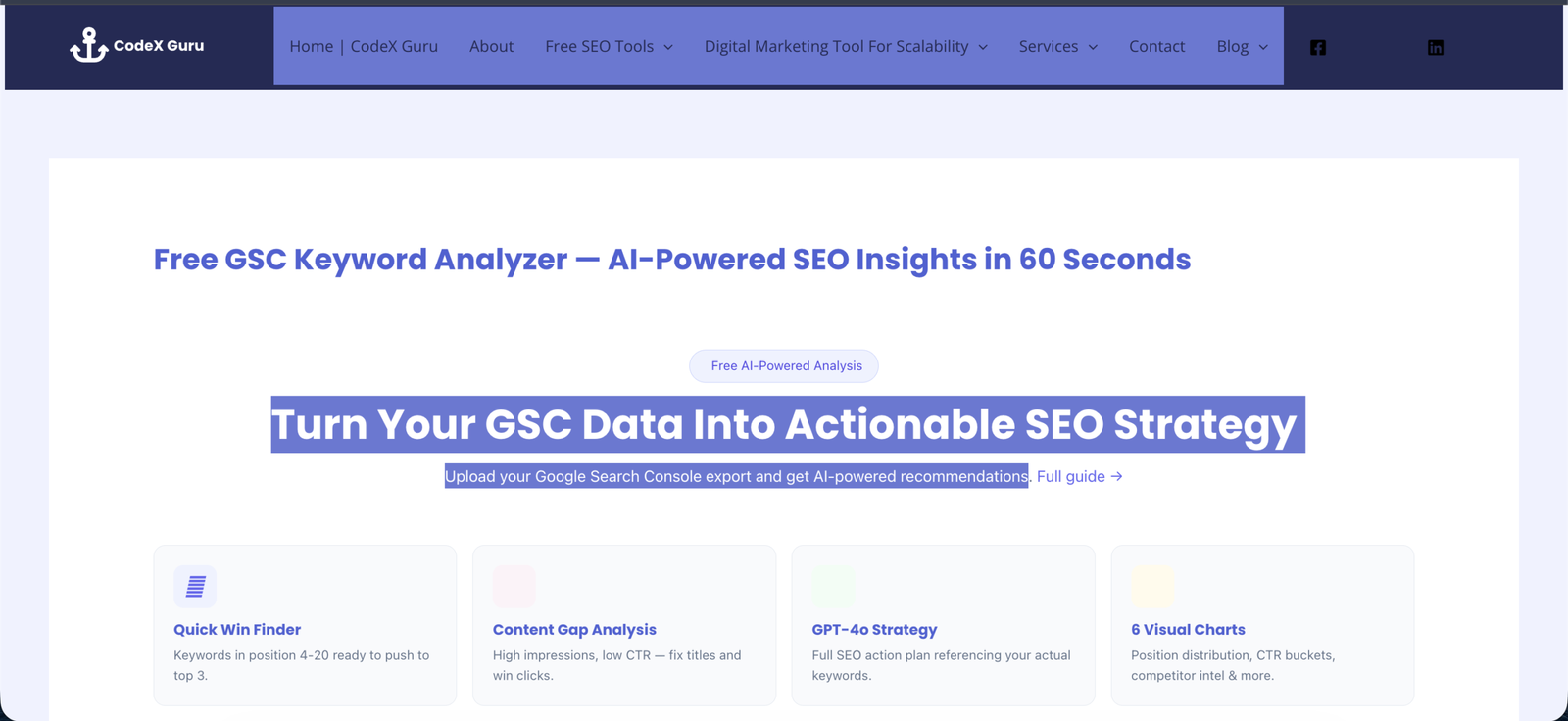
Free GSC Keyword Analyzer — AI-Powered SEO Insights in 60 Seconds
CodeX Guru Team has developed Free google search console (GSC) Analyzer for user, powered by Artificial Intelligence to get insights in less than 60 seconds. It compiles your website real-time data and gives you Actionable SEO Strategy. Codex Guru Claims “Turn Your GSC Data Into Actionable SEO Strategy”

Understanding GSC Keyword Analyzer in 2026
The GSC Keyword Analyzer has undergone substantial improvements since its earlier versions. What started as a basic reporting tool has evolved into a comprehensive keyword intelligence platform that provides unprecedented insights into search performance. The current iteration offers real-time data analysis, predictive modeling capabilities, and integration with other Google services that make it indispensable for modern SEO work.
When I first started using GSC years ago, the data was often delayed, limited, and sometimes frustratingly vague. Today’s version provides near real-time insights with granular detail that allows for immediate optimization decisions. The keyword analyzer specifically has been enhanced with machine learning algorithms that help identify patterns and opportunities that would be impossible to spot manually.
The tool now processes billions of search queries daily and provides website owners with detailed information about which keywords are driving traffic, which ones show potential for growth, and which ones might be declining in effectiveness. This level of insight directly from Google’s search infrastructure is something that third-party tools, no matter how sophisticated, simply cannot replicate.
Core Features and Capabilities
The modern GSC Keyword Analyzer encompasses several key features that make it invaluable for SEO professionals. The performance reporting section provides detailed metrics on impressions, clicks, click-through rates, and average positions for thousands of keywords. But beyond basic metrics, the tool now offers trend analysis, seasonal pattern recognition, and competitive positioning insights.
One of the most significant additions has been the query clustering feature, which groups related keywords and shows how they perform collectively. This helps identify content gaps and opportunities for topic expansion that might not be apparent when looking at individual keywords in isolation.
The tool also includes advanced filtering capabilities that allow users to segment data by device type, country, search type, and date ranges. These filters enable deep-dive analysis that can reveal specific optimization opportunities for different audience segments or market conditions.
Why GSC Keyword Analyzer Matters More Than Ever

The importance of google search console (GSC) Keyword Analyzer has grown exponentially as the SEO landscape has become more complex and competitive. Unlike third-party keyword tools that rely on estimates and projections, GSC provides actual performance data directly from Google’s search results. This authenticity makes it the gold standard for understanding how your website truly performs in search.
Free AI Logo Maker – Create Professional Logos with Artificial Intelligence
Direct Access to Google’s Data
The most compelling reason to prioritize GSC Keyword Analyzer is its direct connection to Google’s search infrastructure. When you’re looking at data in GSC, you’re seeing exactly how Google’s algorithms are interpreting and ranking your content. This eliminates the guesswork and assumptions that come with using external tools.
Third-party tools, while valuable, are essentially making educated guesses about search volume, competition, and ranking factors. GSC shows you the actual queries that led users to your website, the exact positions your pages held in search results, and the real click-through rates you achieved. This level of accuracy is impossible to replicate through external data sources.
Real-Time Performance Monitoring
Modern SEO requires agility and quick response times. Algorithm updates, competitor actions, and market changes can impact search performance within hours or days. GSC Keyword Analyzer provides near real-time data that allows for immediate identification of performance changes and rapid response to both opportunities and threats.
I’ve personally witnessed situations where websites experienced significant ranking changes that were only detectable through GSC data. External tools often have delays of days or weeks in their reporting, which can mean missing critical optimization windows or failing to address problems before they compound.
Comparing GSC with Other Keyword Tools
To truly understand the importance of GSC Keyword Analyzer, it’s helpful to compare it with other popular keyword research and analysis tools available in 2026.
This comparison reveals both the strengths and limitations of GSC Keyword Analyzer. While it excels in providing accurate, real-time data about your own website’s performance, it has limited capabilities for competitive analysis and keyword discovery compared to paid tools.
📖 Related: SERP Analytics Tools | Expert Guide By CodeX Guru
Complementary Tool Strategy
The most effective approach we have found is using GSC Keyword Analyzer as the foundation of keyword strategy while supplementing it with other tools for competitive intelligence and keyword discovery. GSC tells you definitively how your site is performing, while tools like SEMrush and Ahrefs help identify new opportunities and monitor competitor activities.
Practical Applications and Use Cases

Understanding the theoretical importance of GSC Keyword Analyzer is one thing, but seeing how it applies to real-world SEO challenges is where its true value becomes apparent. Over the years, I’ve developed several methodologies for extracting maximum value from the tool.
Content Optimization Strategy
One of the most powerful applications of GSC Keyword Analyzer is identifying content optimization opportunities. The tool reveals queries where your pages appear in search results but have low click-through rates, indicating potential for improvement through better titles, meta descriptions, or content alignment.
Here’s a systematic approach I use for content optimization:
- Identify high-impression, low-CTR keywords – These represent immediate opportunities
- Analyze the search intent behind these queries
- Review current content to identify gaps or misalignments
- Optimize titles and meta descriptions to better match user intent
- Enhance content depth and relevance for target keywords
- Monitor performance changes over the following weeks
📖 Related: SEO content strategy 2026
Discovering New Keyword Opportunities
GSC Keyword Analyzer excels at revealing unexpected keyword opportunities that might not appear in traditional keyword research. The “queries” report often shows long-tail variations and related terms that users are actually searching for, providing insights that can inform content expansion strategies.
I regularly review the queries report to identify:
- Unexpected long-tail variations of target keywords
- Question-based queries that could inspire FAQ content
- Location-specific variations for local SEO opportunities
- Product or service-related terms that indicate commercial intent
- Seasonal or trending topics gaining traction
Technical SEO Insights
Beyond traditional keyword analysis, GSC provides valuable technical SEO insights through its keyword data. Sudden drops in impressions or clicks for specific keywords can indicate technical issues, while changes in average position might reveal crawling or indexing problems.
The tool’s ability to segment data by page allows for detailed analysis of how technical factors impact keyword performance. Pages with slow loading times, mobile usability issues, or crawling problems often show declining performance in GSC before these issues become apparent through other monitoring methods.
Advanced Features and Techniques
As GSC Keyword Analyzer has evolved, several advanced features have been introduced that significantly enhance its analytical capabilities. These features require deeper understanding but provide proportionally greater insights for those who master them.
Query Pattern Analysis
The advanced filtering and comparison features in GSC allow for sophisticated query pattern analysis. By comparing performance across different time periods, you can identify seasonal trends, algorithm impact, and long-term performance trajectories that inform strategic decision-making.
I’ve developed a methodology for quarterly keyword performance reviews that involves:
- Exporting comprehensive keyword data for the analysis period
- Segmenting queries by performance tiers (high, medium, low volume)
- Identifying trending patterns within each tier
- Cross-referencing with known algorithm updates and site changes
- Developing action plans based on identified patterns
Integration with Other Google Tools
The 2026 version of GSC offers enhanced integration with Google Analytics, Google Ads, and other Google services. This integration provides a more complete picture of keyword performance throughout the entire user journey, from search impression to conversion.
The combined data reveals insights such as:
- Which keywords drive the most valuable traffic
- How search performance correlates with on-site engagement
- Which queries lead to conversions versus bounce-outs
- How paid and organic search performance interact
Common Mistakes and How to Avoid Them

Despite its importance and utility, many website owners and SEO professionals make critical mistakes when using GSC Keyword Analyzer. These errors can lead to missed opportunities, misguided optimization efforts, and suboptimal results.
Over-Relying on Position Metrics
One of the most common mistakes is focusing too heavily on average position metrics without considering the broader context. Average position can be misleading, especially for keywords that trigger different types of search results (featured snippets, local packs, image results, etc.).
I’ve learned to evaluate position data alongside:
- Click-through rates for the specific position
- SERP feature presence and competition
- Search volume and commercial intent
- Seasonal and trending factors
Ignoring Low-Volume, High-Intent Keywords
Another frequent error is dismissing keywords with low search volume without considering their potential value. GSC often reveals highly specific, high-intent queries that might not appear in traditional keyword research but can drive valuable traffic and conversions.
These long-tail keywords often have:
- Higher conversion rates due to specific intent
- Lower competition and easier ranking opportunities
- Potential for content expansion and topic clustering
- Insights into user language and search behavior
Misinterpreting Data Fluctuations
GSC data naturally fluctuates due to various factors including algorithm updates, seasonal changes, and competitive dynamics. Inexperienced users often overreact to short-term changes without considering these broader factors.
Effective GSC analysis requires:
- Looking at longer-term trends rather than daily fluctuations
- Understanding seasonal patterns in your industry
- Correlating changes with known algorithm updates
- Considering external factors that might impact search behavior
Integration with Overall SEO Strategy
GSC Keyword Analyzer shouldn’t exist in isolation but should be integrated into a comprehensive SEO strategy that includes content planning, technical optimization, and performance monitoring. The insights from GSC should inform decisions across all aspects of SEO work.
Content Strategy Development
The keyword data from GSC provides invaluable insights for content strategy development. By analyzing which queries are driving traffic and which ones show potential for growth, content teams can prioritize topics and formats that align with actual search demand.
Effective integration involves:
- Regular keyword performance reviews to identify content gaps
- Topic clustering analysis to find content expansion opportunities
- Search intent mapping to ensure content alignment
- Performance tracking for published content
- Iterative optimization based on GSC feedback
Technical SEO Prioritization
GSC keyword data often reveals technical issues before they become critical problems. Declining performance for specific keywords can indicate crawling issues, mobile problems, or site speed concerns that require technical attention.
The keyword analyzer helps prioritize technical SEO work by:
- Identifying pages with declining keyword performance
- Revealing mobile versus desktop performance gaps
- Highlighting pages with indexing or crawling issues
- Showing the impact of technical changes on search performance
Future Developments and Trends
As we progress through 2026, several trends are shaping the evolution of GSC Keyword Analyzer and its role in SEO strategy. Understanding these developments helps prepare for future changes and opportunities.
AI and Machine Learning Integration
Google continues to integrate more sophisticated AI and machine learning capabilities into GSC. These enhancements provide more predictive insights, automated recommendations, and pattern recognition that can identify optimization opportunities that might be missed through manual analysis.
Recent additions include:
- Predictive performance modeling for keyword opportunities
- Automated anomaly detection for performance changes
- Content gap identification based on search trends
- Personalized optimization recommendations
Enhanced Data Granularity
The level of detail available in GSC continues to increase, with more granular data about user behavior, search context, and performance factors. This enhanced granularity enables more precise optimization strategies and better understanding of search performance drivers.
Cross-Platform Integration
Integration between GSC and other marketing platforms continues to expand, providing more comprehensive views of keyword performance across the entire marketing funnel. This integration helps demonstrate SEO value and optimize for business outcomes rather than just search metrics.
Measuring Success and ROI
Demonstrating the value and return on investment from GSC Keyword Analyzer usage requires establishing clear metrics and tracking methodologies. The tool itself provides the data needed to measure success, but it requires systematic approach to extract meaningful insights.
Key Performance Indicators (KPI’s)
When measuring the impact of GSC-driven optimizations, several KPIs provide meaningful insights:
Help You to Calculate ROI Framework
Calculating ROI from GSC Keyword Analyzer usage involves comparing the cost of time invested in analysis and optimization against the value generated through improved search performance. Since GSC is free, the primary cost is time investment, making ROI calculation relatively straightforward.
The framework We use includes:
- Time Investment Tracking – Hours spent on GSC analysis and optimization
- Performance Improvement Measurement – Quantified gains in traffic and rankings
- Value Attribution – Assigning monetary value to performance improvements
- ROI Calculation – Comparing value generated against time invested
- Optimization Strategy Refinement – Adjusting approach based on ROI findings
Best Practices for Maximum Impact
To maximize the value derived from GSC Keyword Analyzer, several best practices have emerged from years of practical application across various industries and website types.
Regular Monitoring Schedule
Consistency in monitoring and analysis is crucial for extracting maximum value from GSC. I recommend establishing a regular schedule that includes:
- Daily monitoring for critical keywords and overall performance
- Weekly deep-dive analysis of new opportunities and issues
- Monthly comprehensive reviews of strategy and performance trends
- Quarterly strategic planning sessions based on GSC insights
Data Export and Analysis
While GSC’s interface provides excellent real-time insights, exporting data for deeper analysis often reveals patterns and opportunities that aren’t apparent in the standard interface. Regular data exports enable:
- Historical trend analysis beyond the 16-month limit
- Custom segmentation and filtering
- Integration with other data sources
- Advanced statistical analysis and modeling
Collaborative Usage
GSC Keyword Analyzer is most effective when used collaboratively across different team members and functions. Content creators, technical developers, and marketing strategists all benefit from GSC insights, and sharing access and insights improves overall optimization effectiveness.
Effective collaboration involves:
- Shared access and regular reporting
- Cross-functional optimization planning
- Coordinated response to performance changes
- Knowledge sharing and training initiatives
Frequently Asked Questions
How often should I check GSC Keyword Analyzer for optimal results?
The frequency of checking GSC Keyword Analyzer depends on your website’s size, competition level, and available resources. For most websites, I recommend daily monitoring of overall performance metrics to catch any significant changes quickly, combined with weekly detailed analysis sessions to identify optimization opportunities. High-traffic sites or those in competitive industries may benefit from more frequent monitoring, while smaller sites might find weekly comprehensive reviews sufficient. The key is establishing a consistent routine that allows you to respond quickly to both problems and opportunities while avoiding analysis paralysis from over-monitoring.
Can GSC Keyword Analyzer replace paid SEO tools completely?
While GSC Keyword Analyzer is incredibly powerful and provides unmatched accuracy for your own website’s performance, it cannot completely replace paid SEO tools. GSC excels at showing how your site performs in search results but has limitations in competitive analysis, keyword discovery, and market research. The most effective approach combines GSC as the foundation for understanding your site’s performance with paid tools for competitive intelligence, keyword research, and market analysis. Think of GSC as providing the “what” and “how” of your search performance, while paid tools help with the “why” and “what’s possible.”
What’s the difference between GSC data and third-party keyword tool estimates?
The fundamental difference lies in data source and accuracy. GSC provides actual performance data directly from Google’s search results, showing real impressions, clicks, positions, and click-through rates for your website. Third-party tools use various estimation methods, including search volume projections, competitive analysis, and algorithmic modeling to approximate search behavior. While third-party tools offer valuable insights for keyword research and competitive analysis, GSC data represents ground truth for your website’s actual search performance. This makes GSC invaluable for measuring the real impact of SEO efforts and making data-driven optimization decisions.
How can small businesses maximize value from GSC Keyword Analyzer with limited resources?
Small businesses can extract significant value from GSC Keyword Analyzer by focusing on high-impact, low-effort optimizations. Start by identifying keywords where your pages appear on the second page of search results (positions 11-20) and optimize those pages for better rankings. Look for high-impression, low-click-through-rate keywords and improve titles and meta descriptions to increase clicks. Focus on long-tail keywords that show commercial intent, as these often have less competition and higher conversion potential. Additionally, use GSC to identify content gaps where you’re getting impressions but not clicks, indicating opportunities to create more targeted content. Even spending just a few hours monthly on GSC analysis can yield substantial improvements for small businesses.
What are the most common GSC Keyword Analyzer mistakes that hurt SEO performance?
The most damaging mistake is making optimization decisions based on short-term data fluctuations rather than longer-term trends. Many users panic over daily or weekly changes that are actually normal variations. Another critical error is focusing solely on high-volume keywords while ignoring valuable long-tail opportunities that GSC reveals. Many users also misinterpret average position data without considering SERP features and click-through rates. Additionally, failing to segment data by device, location, or time period can lead to misguided optimization efforts. Finally, not correlating GSC data with business outcomes means missing opportunities to optimize for keywords that actually drive valuable traffic and conversions rather than just high search volumes.
How has GSC Keyword Analyzer evolved and what should we expect in the future?
GSC Keyword Analyzer has transformed from a basic reporting tool into a sophisticated analytical platform. Recent improvements include enhanced real-time data processing, better integration with other Google services, more granular filtering options, and AI-powered insights. The tool now provides predictive analytics, automated anomaly detection, and more detailed performance breakdowns. Looking ahead, we can expect continued integration of machine learning for automated optimization recommendations, enhanced cross-platform data integration, more sophisticated competitive insights, and improved prediction capabilities for keyword opportunities. The trend is toward making GSC not just a reporting tool but an active optimization partner that provides actionable insights and recommendations based on comprehensive search performance analysis.
📅 Last Updated: 4 May 2026
✍️ Author: CodeX Guru SEO Team
✅ Accuracy: What is Google Search Console (GSC) | Unlimited Benefits For SEO Rankings
🔄 Update Schedule: We review this article quarterly to ensure accuracy, self research is important.