

This guide is written for SEO professionals and digital marketers who want to move beyond guesswork and make data-driven decisions about search rankings. Understanding search engine results pages has become more important than ever — and the right SERP analytics toolset can completely transform how you approach keyword research, content strategy, and competitor analysis.
This guide covers everything from basic rank tracking to advanced SERP feature detection, search intent classification, and AI-powered content format recommendations. Whether you are just getting started or looking to refine your existing workflow, you will find actionable insights and practical techniques throughout every section.
Years of hands-on experience with various SERP analytics tools have shaped this guide. The right toolset can transform guesswork about search trends into decisions that truly drive organic traffic results. Let us start with the fundamentals.
🔧 FREE TOOL
Put This Guide Into Practice — Free SERP Checker Tool
Analyze any keyword in real-time, detect SERP features, and get AI-powered content format recommendations. Free with 2,500 queries/month via Serper API.
🔍 Open the Free SERP Checker Tool →
No subscription. No data stored. Runs in your browser.
📚 Complete SERP Analytics Guide — Updated May 2026 • Expert Insights
What Are SERP Analytics Tools?
Any complete analysis of search visibility must start with the fundamentals. SERP analytics tools are specialized software solutions designed to monitor, analyze, and report on search engine results pages. They go beyond simple rank tracking by providing detailed insights into the various elements that appear in search results, including featured snippets, knowledge panels, local packs, and other SERP features.
These tools collect data by systematically querying search engines and analyzing the returned results. They track changes in rankings, monitor competitor performance, and identify trends in how search results evolve over time. The most sophisticated tools can simulate searches from different locations, devices, and even user personas to provide a comprehensive view of the search landscape.
The value of SERP analytics extends beyond traditional SEO metrics. Modern tools help identify content opportunities, understand user intent, and optimize for the increasingly complex world of search features. They have become essential for anyone serious about organic search performance.
🔍 Try It Free: Real-Time SERP Checker Tool By CodeX Guru →
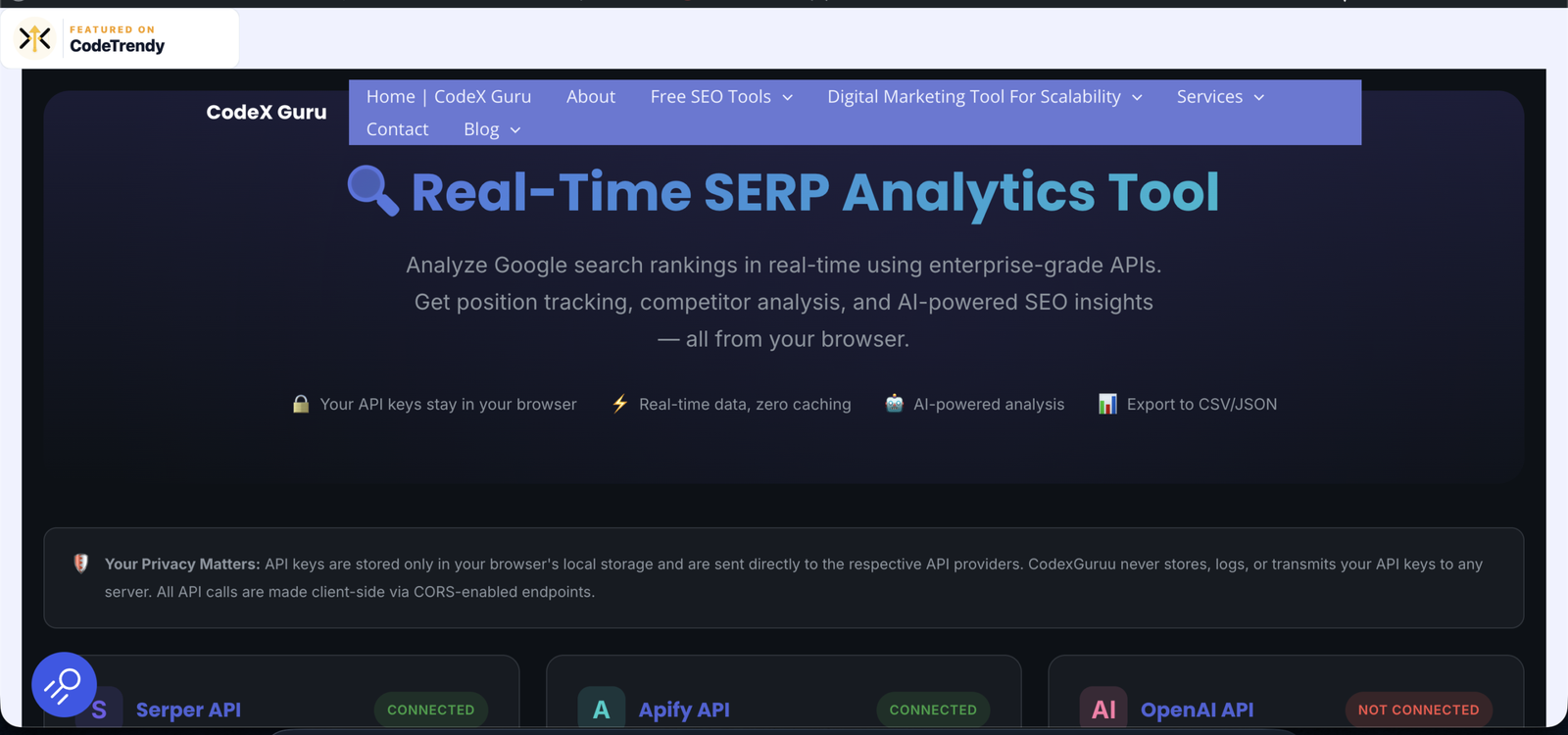
Search Engine Results Pages Analytics Tool by CodeX Guru
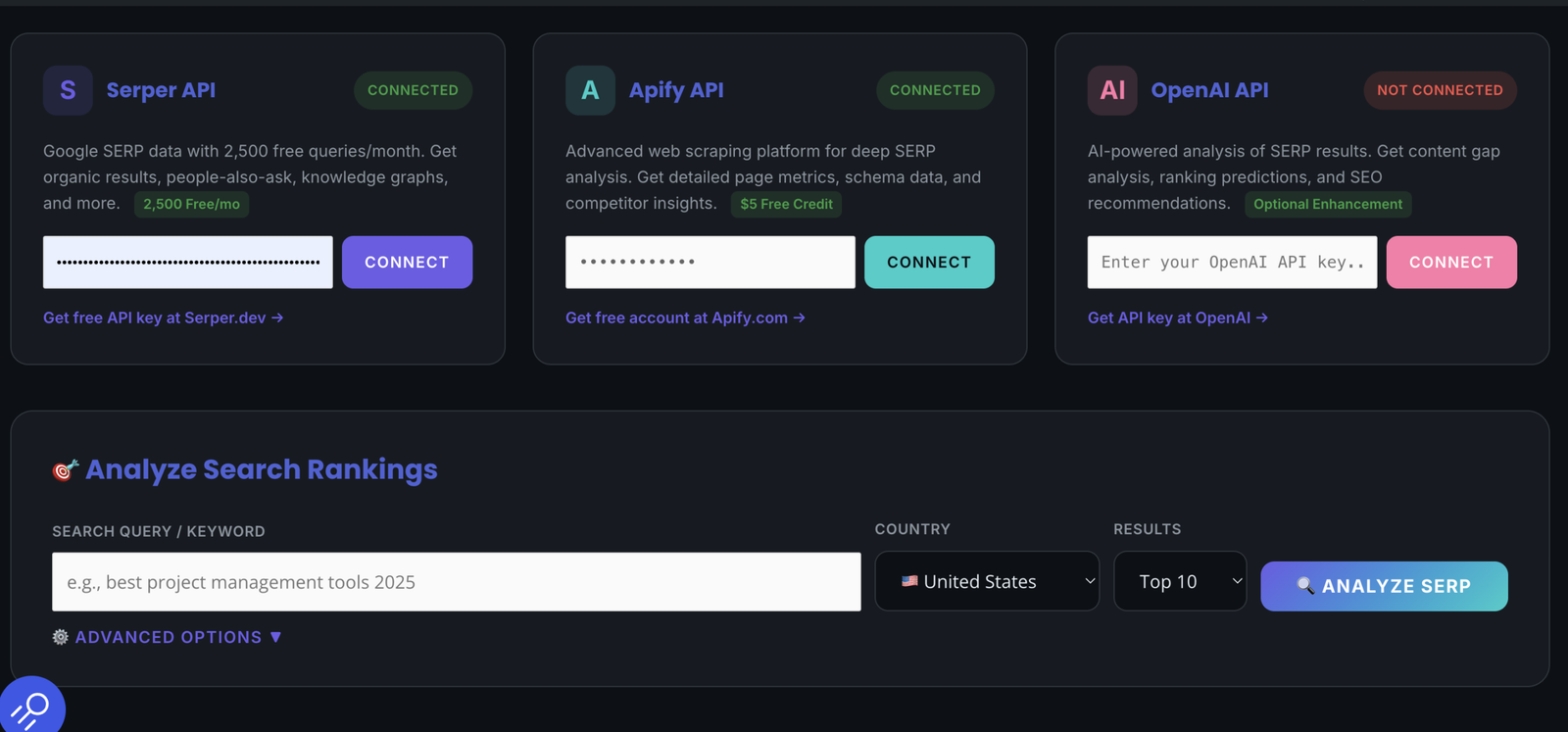
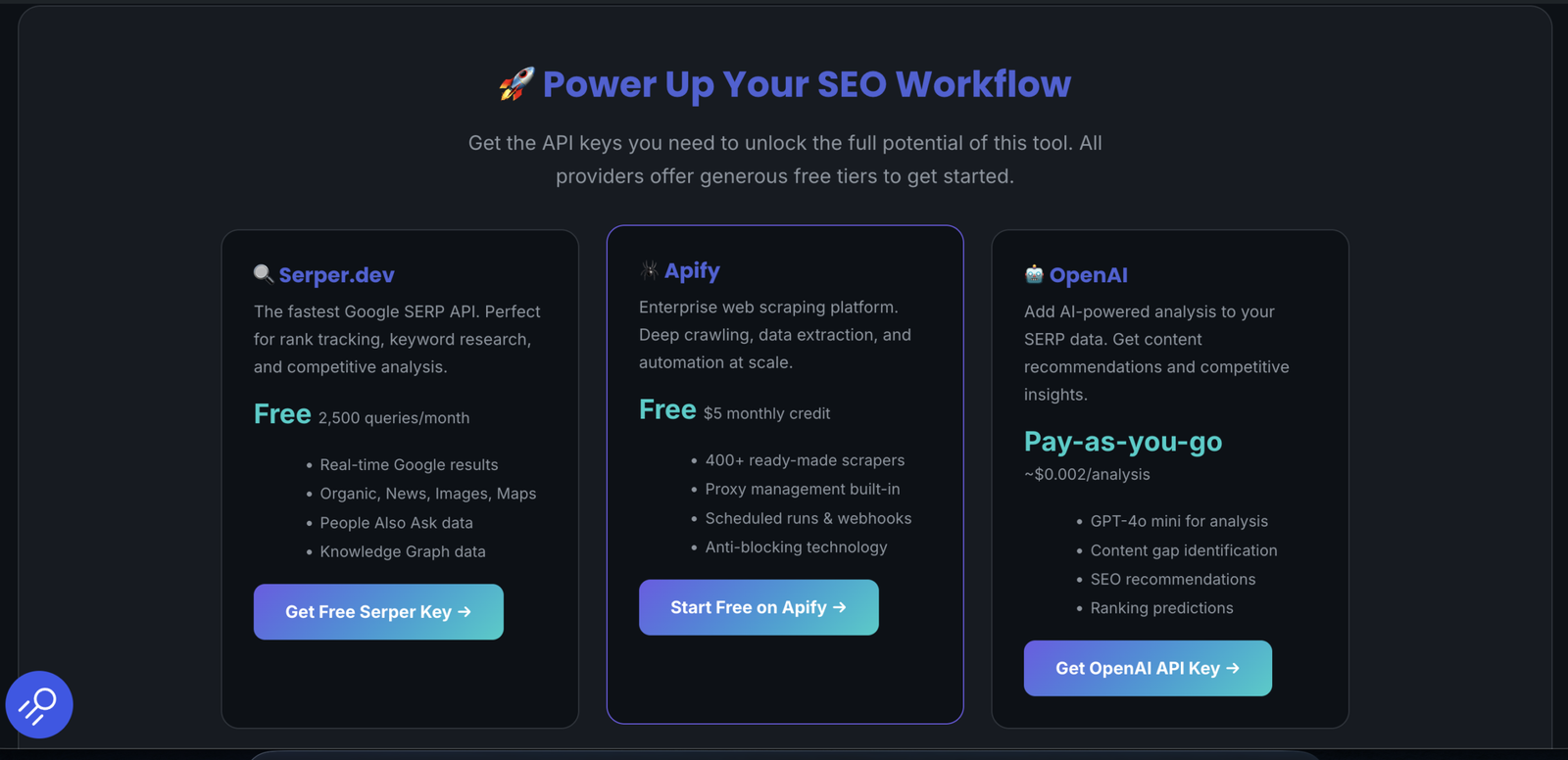
SERP Feature Detection in Free SERP Checker Tool by CodeX Guru
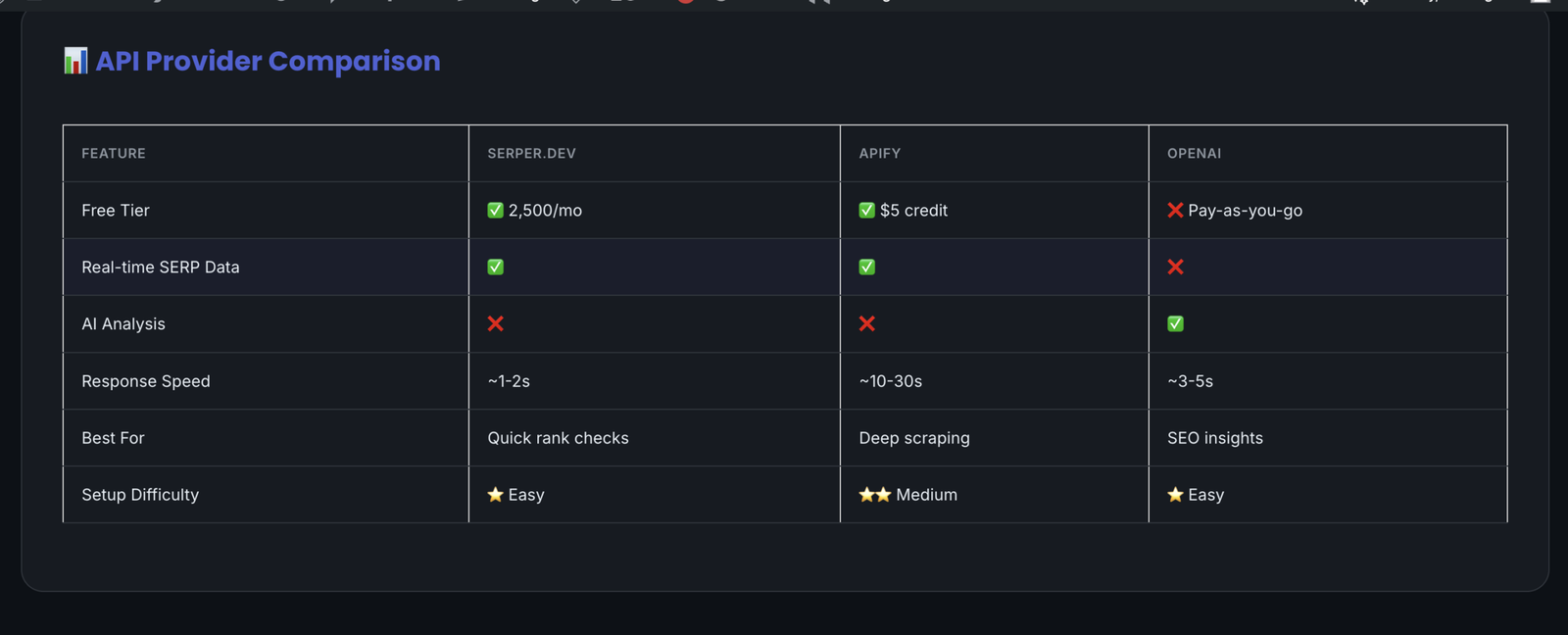
Core Features Every SEO Professional Should Understand
Understanding what each feature does helps you choose the right tool for your specific needs and get maximum value from your investment in search analytics.
Rank Tracking and Real-Time Monitoring
The foundation of any SERP analytics tool is its ability to track keyword rankings accurately and consistently. Modern tools offer several advantages over manual checking:
- Automated daily tracking that eliminates human error and saves countless hours
- Historical data preservation that shows ranking trends over weeks, months, or years
- Multiple search engine support including Google, Bing, Yahoo, and regional engines
- Device-specific tracking for mobile, desktop, and tablet results
- Location-based monitoring for local and geo-targeted campaigns
The best tools provide ranking data that is both accurate and actionable, with clear visualization of trends and significant changes over time.
SERP Feature Detection and Analysis
Understanding which SERP features appear for your target keywords is crucial for modern SEO success. Quality tools monitor and report on all major feature types including featured snippets, knowledge panels, local packs, video carousels, and People Also Ask boxes.
Featured snippets represent one of the most valuable SERP features to track. Tools that excel in this area show not only when featured snippets appear but also which content currently holds these positions and how often they change hands.
Local pack monitoring has become essential for businesses with physical locations. The best tools track local pack appearances, monitor review scores, and identify opportunities to improve local visibility across service areas.
Competitor Intelligence and Benchmarking
Competitor ranking comparison shows how your rankings stack up against key competitors across your entire target keyword set. This data helps identify both strengths and weaknesses in your current SEO strategy.
Share of voice analysis quantifies your visibility compared to competitors in search results. This metric provides a clearer picture of competitive positioning than rankings alone and tracks market share over time.
Competitor content analysis reveals which pages competitors use to rank for specific keywords, helping identify content gaps and new opportunities in your own strategy.
Search Volume and Keyword Data Integration
Many tools integrate keyword research capabilities to create a more complete picture of search opportunity:
- Search volume estimates and seasonal trends
- Keyword difficulty scores and competition levels
- Related keyword suggestions and topic clusters
- Long-tail keyword opportunities with lower competition
- Seasonal search patterns for content planning
SERP Analytics Tools Compared: Which One Is Right for You?
Choosing the right tool is one of the most important decisions in search analytics. The table below compares the most widely used options — including our own free tool — so you can make an informed choice based on your budget and requirements.
SEMrush: The All-in-One Powerhouse
SEMrush has established itself as one of the leading solutions for comprehensive search analytics in 2026. You can try SEMrush free for 7 days to evaluate whether it fits your workflow. Its Position Tracking tool provides detailed insights into ranking performance, while the Organic Research feature reveals competitor strategies with impressive depth.
What sets SEMrush apart is its integration of SERP analysis with other SEO functions. You can seamlessly move from analyzing SERP features to conducting keyword research to planning content strategies all within one platform.
Ahrefs: Data Accuracy Champion
Ahrefs built its reputation on backlink analysis but has evolved into a formidable search analytics platform. Its Rank Tracker provides highly accurate data with frequent updates, while the Keywords Explorer offers detailed SERP analysis for individual queries with clear feature breakdowns.
Ahrefs’ strength lies in its data quality and the depth of its keyword database. The tool consistently provides reliable information that forms a solid foundation for SEO decision-making across industries and markets worldwide.
Moz Pro: User-Friendly Excellence
Moz Pro strikes an excellent balance between comprehensive features and ease of use. Its Rank Tracker integrates seamlessly with other Moz tools, providing a cohesive SEO workflow that many users find intuitive and accessible even without deep technical knowledge.
Advanced SERP Analytics Techniques for 2026
These advanced approaches help you extract maximum value from your search data and build a sustainable competitive advantage in an increasingly AI-driven search landscape.
Intent-Based SERP Analysis
Understanding search intent through SERP analysis has become crucial for content optimization in 2026. Different types of queries produce different SERP layouts, and recognizing these patterns helps create more targeted, higher-ranking content that matches exactly what Google wants to serve.
Informational queries often feature featured snippets, knowledge panels, and People Also Ask sections. Commercial queries typically show shopping results, ads, and comparison-focused organic results. Local queries display map packs and location-specific results. Each pattern tells you exactly how to structure your content.
Seasonal SERP Pattern Recognition
SERP features and rankings often follow seasonal patterns that experienced SEO professionals can identify and exploit before competitors do. Quality tools reveal these patterns through historical data analysis and trend visualization across months and years of data.
Identifying seasonal patterns early allows for proactive optimization and content planning that capitalizes on search opportunities before competition peaks and before ranking a new page becomes significantly harder.
Competitive Gap Analysis
Advanced SERP analysis reveals gaps in competitive coverage that represent untapped ranking opportunities. This involves systematically analyzing which keywords competitors rank for that you do not — and vice versa — to find the fastest path to new organic traffic.
The most valuable gaps are often in middle-tail keywords where competition is moderate but search volume is sufficient to drive meaningful traffic to your pages consistently.
Setting Up Effective SERP Analytics Monitoring
Good setup decisions save hours every week and ensure you never miss a critical ranking change that requires immediate action from your SEO team.
Keyword Selection Strategy
Effective monitoring starts with intelligent keyword selection. Rather than tracking every possible keyword, focus on those that align directly with business objectives.
Primary keywords should include your most important business terms, branded keywords, and high-value commercial queries. These form the core of your monitoring strategy and should be checked most frequently — ideally daily.
Secondary keywords might include informational queries related to your industry, competitor brand terms, and emerging opportunities identified through ongoing research.
Long-tail keywords often provide the most actionable insights, as they surface SERP feature opportunities more easily and show less volatile day-to-day ranking fluctuations than competitive head terms.
Location and Device Targeting
Modern SERP monitoring requires careful consideration of location and device targeting. Search results can vary significantly based on these factors, making broad untargeted monitoring far less valuable than focused geographic and device-specific tracking.
Device targeting has become crucial as mobile-first indexing has changed how Google evaluates and ranks content. Mobile and desktop results often differ significantly, particularly for local and commercial queries where Google serves different SERP features by device type.
Monitoring Frequency and Alert Setup
Setting intelligent alerts prevents information overload while ensuring you never miss significant changes. Focus your alerts on:
- Significant ranking drops for important commercial keywords
- New SERP feature appearances for your target keywords
- Competitor movements into your top ranking positions
- Unusual SERP volatility patterns indicating algorithm activity
Interpreting SERP Analytics Data for Actionable Insights
Collecting data is only half the job. This section covers how to interpret what you find and translate raw numbers into decisions that move rankings in the right direction consistently.

Ranking Fluctuation Analysis
Not all ranking changes are created equal. Understanding which fluctuations matter and which represent normal daily volatility is crucial for calm and effective SEO management without overreacting to noise.
Sudden drops across multiple keywords often indicate technical issues or algorithm updates that require immediate investigation. Gradual declines might suggest content freshness issues or increasing competition that can be addressed methodically over time.
The key is looking at patterns across related keyword groups rather than individual data points. Single-keyword fluctuations are often just noise, while patterns across topic clusters typically signal meaningful changes that warrant real action from your team.
SERP Feature Opportunity Identification
The systematic process for capturing SERP features involves four clear steps:
- Identifying queries where SERP features appear but you do not currently hold them
- Analyzing the content that currently holds these features to understand format and structure requirements
- Evaluating your existing content’s potential for optimization to capture these features
- Prioritizing opportunities based on search volume, business relevance, and current competition level
Competitive Movement Analysis
Understanding competitor movements in SERPs provides valuable intelligence about their strategies and emerging market changes. Sudden improvements in competitor rankings might indicate new content publication, technical improvements, or active link building campaigns worth investigating.
ROI and Performance Measurement
Establishing SERP Analytics KPIs
Share of voice measures your visibility across target keywords compared to competitors, providing a clearer picture of your overall search market position and how it changes month over month.
SERP feature ownership tracks how many valuable features you control across your keyword set, which often correlates better with actual traffic than traditional average position metrics alone.
Click-through rate estimation based on ranking positions and detected SERP features provides more realistic insights into actual traffic potential before committing resources to optimization campaigns.
Connecting SERP Data to Business Outcomes
Integrating search analytics tools with Google Analytics and other business intelligence platforms creates a more complete picture of SEO performance that resonates with stakeholders and justifies continued SEO investment at the organizational level.
Future Trends in SERP Analytics
AI and Machine Learning Integration
In 2026, search analytics tools are increasingly incorporating artificial intelligence to provide more sophisticated and predictive insights. Machine learning algorithms can identify patterns in SERP changes that humans might miss, forecast potential ranking movements, and proactively suggest optimization opportunities before rankings decline.
Natural language processing is being used to better understand search intent and match it with SERP feature opportunities at scale. According to Google’s structured data documentation, rich results and SERP features will continue expanding as AI capabilities improve across search platforms.
Voice Search and Alternative Interfaces
As voice search and AI-powered search interfaces grow in importance throughout 2026, tools are evolving to track these new result formats. Voice search results often differ significantly from traditional text-based searches, requiring new monitoring approaches and content optimization strategies tailored to conversational queries.
Enhanced Local and Personalization Tracking
Search results are becoming increasingly personalized and location-specific across all device types. Future tools will need to provide more granular tracking of personalized results while maintaining user privacy requirements that are becoming stricter across global markets.
Common SERP Analytics Pitfalls and How to Avoid Them
Over-Reliance on Traditional Rankings
One of the biggest mistakes in search analytics is focusing too heavily on traditional ranking positions while ignoring all other visibility signals. Modern search results are complex, with SERP features often more valuable than the equivalent organic ranking position in terms of actual clicks and traffic.
A page ranking at position 3 might receive significantly more clicks than the page at position 1 if it holds a featured snippet or appears in other high-visibility SERP features. Comprehensive analysis must consider all aspects of search visibility.
Ignoring Search Intent Evolution
Search intent for specific keywords can evolve over time as user behavior changes, leading to shifts in SERP features and ranking factors. Regular analysis of SERP layouts and feature composition helps identify these intent shifts before they significantly impact your performance and traffic.
Insufficient Competitive Context
Analyzing your own SERP performance in isolation provides incomplete and potentially misleading insights. Changes in your rankings might reflect broader market shifts or algorithm updates rather than any issues with your own SEO efforts. Competitive context helps distinguish between these scenarios accurately.
Best Practices for SERP Analytics Implementation
Team Collaboration and Workflow Design
SEO specialists focus on technical ranking factors and page-level optimization opportunities. Content creators need insights into SERP features and user intent to write effectively for search. Management wants high-level performance summaries and clear ROI metrics. Good tooling serves all three audiences from a single data source.
Regular Auditing and Strategy Adjustment
Strategies should be audited and adjusted regularly based on changing business needs and evolving market conditions. The approach that worked six months ago may not be optimal today given the pace of algorithm changes and competitive market shifts in 2026.
- Changes in business priorities and target market segments
- Evolution in search behavior and available SERP features
- New competitive threats or emerging market opportunities
- Tool capability updates and new feature releases from providers
Integration with Broader SEO and Content Strategy
Search analytics works best when fully integrated with broader SEO and digital marketing strategies rather than operating as a standalone reporting function. Connecting data with content planning, technical SEO audits, and link building strategies creates a more cohesive and measurably effective approach to organic search growth.
Frequently Asked Questions About SERP Analytics
What is a SERP analytics tool?
A SERP analytics tool analyzes Google search engine results pages in real-time, tracking keyword rankings, detecting SERP features like videos, lists, how-to snippets, and featured snippets, and providing data to guide your SEO content strategy. Unlike simple rank trackers, SERP analytics tools show the full competitive landscape — all results, all features, all intent signals — giving you the intelligence to make better content and optimization decisions every day.
Which solutions analyze SERP features to guide content format choices like video, lists, or how-to?
Tools that analyze SERP features for content format guidance include free tools like CodeX Guru’s free SERP Checker Tool (uses Serper API and OpenAI for AI-powered recommendations), and paid platforms like Semrush, Ahrefs, and Moz Pro. These tools detect whether Google is showing video carousels, how-to schemas, numbered lists, or featured snippets for your target keyword and recommend the optimal content format to match what Google is already rewarding.
How accurate is SERP intent detection?
Intent detection accuracy depends on the method used. Keyword modifier-based classifiers achieve approximately 70–80% accuracy. SERP composition analysis achieves higher accuracy because it reflects what Google itself has determined the dominant intent to be for that specific query based on real user behavior signals.
What SERP features should I analyze before creating content?
Before creating any piece of content, analyze these key SERP signals for your target keyword: featured snippets (signals need for concise structured answers), video carousels (signals strong preference for video content), People Also Ask boxes (reveals must-cover subtopics), how-to rich results (signals step-by-step format preference), shopping results (confirms transactional intent), and local packs (confirms local intent). Each detected feature tells you precisely what content format Google is already rewarding for that query.
How do I use SERP analysis to choose between video, list, or how-to content formats?
Analyze the live SERP for your target keyword and examine which features dominate the results page. If video carousels appear in the top half of results, create a YouTube video as your primary asset with a written companion post. If numbered or bulleted list featured snippets appear, structure your content with clear lists and direct answers under matching H2 headings. If how-to rich results appear, use HowTo schema markup and step-by-step formatting throughout your content.
What is the difference between SERP analytics tools and regular rank trackers?
Regular rank trackers show you one data point: your position number for a keyword. SERP analytics tools show the entire results page — every competitor position, every SERP feature present, People Also Ask questions, related searches, and intent signals — and help you understand why rankings are what they are and what it would take to improve them. The difference is like checking your speedometer versus having a full navigation system showing traffic, road conditions, and the fastest route to your destination.
How often should I check my SERP analytics data?
For most businesses, daily automated monitoring with weekly manual review sessions produces the best balance of coverage and efficiency. Brand terms and high-value commercial keywords merit daily attention. Informational long-tail keywords can be reviewed weekly or bi-weekly. The most important practice is setting up intelligent threshold-based alerts for significant ranking changes so you can respond quickly without spending time manually checking stable keywords every day.
How can I use SERP analytics to improve my content strategy?
Start by analyzing the live SERP for each content topic before you write a single word. Identify what content format the top 5 results use, which SERP features appear, and what People Also Ask questions are surfaced. Use this data to determine your content format, structure your headers to match PAA questions, and incorporate the schema markup that matches the rich results already appearing in search results for that query.
🛠️ Ready to Apply Everything in This Guide? Try Our Free SERP Checker Tool
Everything covered in this guide — SERP feature detection, search intent classification, competitor position tracking, People Also Ask extraction, and AI content recommendations — is available in our free browser-based tool. No subscription required. No data sent to our servers. Ever.
- ✅ Real-time Google rankings for any keyword in any country
- ✅ Automatic SERP feature detection with content format recommendations
- ✅ Search intent classification from live SERP composition
- ✅ AI-powered content outline suggestions via optional OpenAI connection
- ✅ People Also Ask extraction for content planning
- ✅ Export results as CSV or JSON for client reports
- ✅ Free with 2,500 queries per month via Serper API